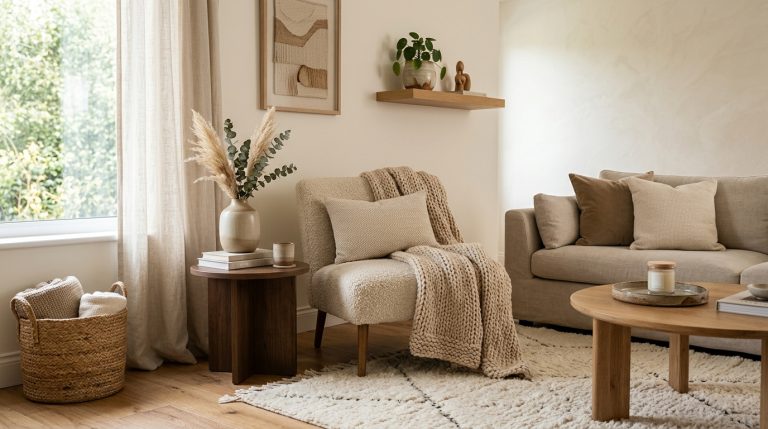
Minimalist Home Decor: How to Actually Pull It Off Without Your Place Looking Empty
My living room used to have that “rental beige” look, even though I’d painted the walls a decent agreeable gray. It just felt… blah. Like a waiting room. I thought maybe I needed more art, or a bolder accent wall, but everything I tried just added clutter or felt disconnected. The actual problem, it turns out, was the curtains. I had these flimsy, light-filtering white panels from Amazon, a two-pack for $18, that I thought were minimalist because they were white. Nope. They just made the room feel unfinished and dated, like a cheap hotel. They let in too much light, creating glare, and basically did nothing for the room except hang there.
Affiliate Disclosure: As an Amazon Associate, we earn from qualifying purchases. This means we may earn a small commission when you click our links and make a purchase on Amazon. This comes at no extra cost to you and helps support our site.
The Curtain Conundrum: Minimalist Doesn’t Mean Bare
I realized that minimalist design isn’t about having nothing; it’s about having the right things. And curtains, believe it or not, are one of those “right things” that can make or break a room, especially when you’re trying to achieve a clean, uncluttered look. Instead of those thin, sheer panels, I invested in the IKEA MAJGULL blackout curtains. They’re $35 per panel, which felt like a splurge at the time compared to my $18 Amazon mistake, but it was worth every penny. I bought two panels for my standard 72-inch window. Here’s why they work:
- Weight and Texture: They’re thick and have a nice drape. This adds a sense of quality and permanence to the room, even though they’re plain. My old curtains looked like bedsheets.
- Color Depth: I chose the dark gray. It sounds counterintuitive for a minimalist look, but a deeper, richer color anchors the room. It provides a backdrop, making the few pieces of furniture I do have stand out, rather than fade into the beige abyss.
- Functionality: Blackout curtains are amazing. They block light, which is great for sleep, but they also give the room a finished, intentional feel. When they’re drawn, the room feels like a cozy sanctuary. When open, they stack neatly and don’t look messy.
The key here is that even in a minimalist space, you need elements that provide structure and a bit of visual weight. Flimsy fabrics just don’t cut it. Don’t go for the cheapest, thinnest white curtains you can find thinking it’s minimalist. It’s just cheap.
Rugs: The Unsung Hero (and a warning)
My next big lesson was about rugs. For a long time, I thought a rug would just add another thing to clean, or break up the clean lines of my hardwood floors. Wrong. A rug defines a space, especially in an open-concept living area or a larger room. I initially bought a 5×7 rug from Target’s Threshold line, thinking it would be fine for my 10×12 living room. It was not fine. It floated in the middle of the room like a postage stamp and made the whole space feel disjointed. It also started pilling within three months, which was infuriating. Skip those Target Threshold rugs unless you enjoy vacuuming tiny fuzz balls daily.
In a 10×12 room, you need at least an 8×10 rug. I learned this the hard way. I ended up returning the Target rug (thank goodness for their return policy) and saving up for an 8×10 jute rug from Rugs.com. It was about $250 on sale, which felt like a lot for a rug, but it’s been fantastic. Jute is perfect for a minimalist aesthetic because of its natural texture and neutral color. It adds warmth and interest without being visually loud. Crucially, it extends under the front legs of my sofa and armchair, which makes the seating area feel cohesive and grounded. This creates a clear zone for relaxation without needing a bunch of extra furniture.
The trick is to ensure your rug is large enough to encompass at least the front legs of all major furniture pieces in that zone. If your sofa is floating, your room will feel like it is too.
Furniture: Less is More, But Choose Wisely
When I first moved into my apartment, I was convinced I needed a full living room set – sofa, loveseat, coffee table, two end tables. It quickly felt crowded and oppressive. I ended up selling the loveseat and one end table on Facebook Marketplace. What I kept was a simple, well-made sofa (a neutral gray fabric), a comfortable armchair (also gray, slightly different shade for subtle contrast), and a single coffee table. My coffee table is a simple square, light wood design from Wayfair, around $120. It’s functional, not overly decorative, and keeps the surface area clear. I avoid anything with intricate details or too many shelves, as these tend to accumulate visual clutter.
I also ditched the idea of needing matching everything. My end table is a small, round metal piece from HomeGoods for $30, which I only use for a lamp. The key to minimalist furniture is not just the quantity, but the scale and visual lightness. Choose pieces with clean lines and exposed legs where possible, as this makes them feel less bulky. A solid, skirted sofa, for example, can feel very heavy in a minimalist space. My sofa has slim arms and exposed wooden legs, which helps it feel open and airy.
Decorating with Intention: The “One-In, One-Out” Rule
This is probably the hardest part for me, because I love a good thrift store find. But to keep a truly minimalist home from looking empty, you need to be extremely intentional about what you bring in. My rule is now “one-in, one-out.” If I buy a new decorative object – say, a simple ceramic vase – something else has to go. This prevents accumulation. The items I do keep are things I genuinely love or that serve a purpose:
- Art: I have two pieces of art in my living room: one large abstract print from Etsy (downloaded and printed at a local print shop for about $40, then framed with an IKEA RIBBA frame for $20) and a smaller piece of original art from a local artist. Both are simple, mostly neutral colors, and not overly busy. They provide visual interest without being overwhelming.
- Plants: One large snake plant in a simple ceramic pot. It adds life and texture without being fussy. I tried a fiddle-leaf fig once. It died within a month and left me with a sad, empty spot. Snake plants are practically indestructible.
- Books: I keep a small, curated selection of books on a floating shelf. These are books I actually read and re-read, not just for display. They add a touch of personality without creating visual noise.
The mistake I made early on was thinking that “minimalist” meant “no personality.” It doesn’t. It means your personality is expressed through a few, carefully chosen items that you genuinely value, rather than a collection of random things that just fill space.
My biggest takeaway is that a minimalist home doesn’t look empty; it looks thoughtful. It requires a bit more effort in choosing the right foundational pieces and then exercising restraint with everything else. It’s about quality over quantity, and function over pure aesthetics.
This weekend, measure your largest room and then check out Rugs.com or a similar online retailer for an 8×10 or 9×12 neutral rug. You can always return it if it’s not right, but it will give you a real sense of how a properly sized rug can anchor your space.
Instant download — no subscription needed