How to Decorate for Fall Without It Looking Like a Halloween Store Exploded
My living room had that “rental beige” look no matter what I tried — until I figured out it was the curtains. For years, I struggled to make my small, north-facing living room feel cozy and inviting, especially during the colder months. I’d buy cute throw pillows, light nice candles, and even paint an accent wall (which, let’s be honest, just made the other walls look even more beige). But nothing quite worked. It felt like I was constantly fighting against the blandness of the space, trying to force personality into a room that just wasn’t having it. Then, one autumn, while scrolling through Pinterest, I noticed a common thread in all the “cozy fall living room” photos: the curtains were always a deep, rich color. It hit me – my flimsy, light-filtering white curtains were doing nothing but amplifying the beige and making the room feel cold. That was the moment I realized the curtains were the problem, and a quick fix there could change everything.
Affiliate Disclosure: As an Amazon Associate, we earn from qualifying purchases. This means we may earn a small commission when you click our links and make a purchase on Amazon. This comes at no extra cost to you and helps support our site.
Start with the Right Curtains
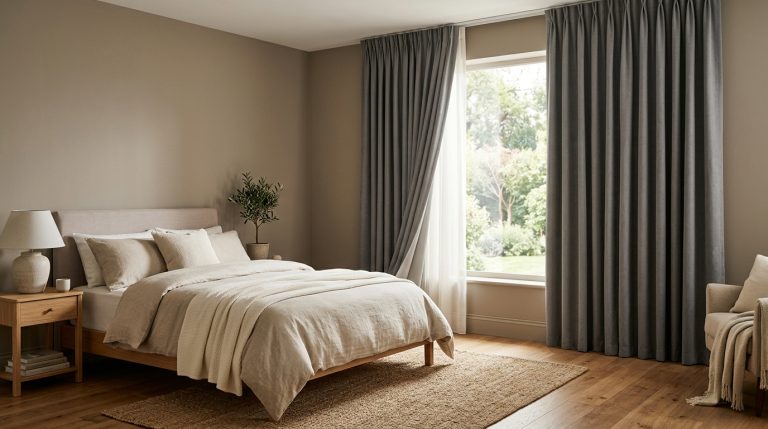
I decided to ditch my old curtains, which were just basic white sheer panels from Walmart that I’d picked up for about $15 a pair. They let in too much glare and did nothing for insulation. I swapped them out for a pair of IKEA MAJGULL blackout curtains in dark green ($35 per pair for the 98-inch length). I bought two pairs for my standard-sized window (roughly 80 inches wide) to get that full, gathered look. Don’t skimp here; one pair for a wide window looks stingy. Always buy enough panels to cover at least twice the width of your window. The MAJGULL curtains are surprisingly thick and good quality for the price. They immediately added a layer of warmth and depth to the room. The dark green feels like autumn without being overtly “fall-themed” – it’s a muted, sophisticated color that doesn’t scream “pumpkin spice everything.” Plus, they actually block light and help with drafts, which is essential when temperatures drop.
Skip the Seasonal Clichés and Focus on Feeling
My first attempt at fall decorating involved pulling out a box of plastic pumpkins and a wreath made of fake leaves. The result was a house that looked like a hobby store had exploded in orange. I realized that subtlety is key when decorating for fall without going overboard. Instead of buying everything labeled “fall,” I focus on textures, colors, and natural elements. Think about what fall feels like—rich, layered, and tactile—not just what it looks like in a seasonal aisle.
Layer in Textures and Natural Elements
After the curtains, my next move was to layer in some warmer textures. My old throw blankets were mostly lightweight cotton or linen, great for summer but not for coziness. I picked up a couple of chenille throws from HomeGoods for about $20 each—look for chunky knits or faux fur if you like that look, but avoid anything that sheds excessively. I had a super soft faux fur throw once from Target (about $25) that seemed like a bargain, but the shedding was relentless; every time I sat with it, I’d end up covered in white fibers. Instead, I stuck with a dense chenille throw and a chunky merino wool blend from L.L.Bean ($68) that’s held up beautifully for three seasons now. Drape these over your sofa or the back of a chair—they’re functional and they add visual warmth. The key is choosing textures that actually feel good when you touch them, because fall decorating isn’t about decoration; it’s about making a space feel like a place you want to spend hours in.
Beyond throws, I brought in natural elements. I grabbed some cinnamon sticks from the grocery store bulk section (about $3 for a bundle) and tied them together with twine, then tucked them into a vase on my coffee table. A few branches from my yard, stripped of leaves and painted a muted bronze, go into a tall floor vase beside the couch. These small touches create visual interest without feeling manufactured. The scent of cinnamon also adds to the overall sensory experience—it’s subtle and genuine, not the aggressive “fall-scented” candle assault that many stores push in September.
Warm Lighting Changes Everything
Lighting was the final piece I’d overlooked. My overhead fixture was a standard recessed light, bright and clinical. I replaced the standard bulbs with warm-white LED bulbs (60-watt equivalent, about $4 each at any hardware store) to shift the color temperature from cool to warm. I also added a few warm-light table lamps around the room. I found a brass arc lamp at West Elm for $199 that I positioned over my reading chair, and it completely changed the ambiance after dark. If you’re on a tighter budget, a simple tripod floor lamp with a warm bulb ($30–50) does the job just fine. The warm light makes the green curtains look richer and makes the entire room feel like evening, even at 5 p.m. when the sun sets early in autumn.
The transformation wasn’t about buying a lot of “fall stuff.” It was about understanding that coziness comes from the interplay of color, texture, light, and genuine comfort. The curtains were just the catalyst. Once I had that depth and richness from the deep green fabric, everything else fell into place naturally. Now when autumn arrives, I don’t panic about seasonal decorating. I simply adjust the lighting warmth, pull out the textured throws, and let the space settle into what it already is: cozy, inviting, and deeply comfortable.