The Rug Sizing Mistake That Makes Every Room Look Wrong
My living room had that “rental beige” look no matter what I tried — until I figured out it was the curtains. But that’s a story for another time. Today, we’re talking about the silent killer of good room design, the mistake that makes everything feel off: undersized rugs. For years, I was that person, buying a 5×7 rug for a 10×12 living room, thinking I was saving money and that it would just “tie the room together.” Spoiler alert: it did not. It made the room look smaller, the furniture look adrift, and me look like I had no idea what I was doing. Because, honestly? I didn’t. Not when it came to rugs, anyway.
My Journey Through Rug Sizing Hell
My first apartment after college was a tiny, sad space with beige carpets that had seen better days (like, decades ago). I was desperate to cover them, so I went to HomeGoods, lured by the promise of a bargain. I found a lovely abstract rug, 5×7 feet, for about $120. It felt like a steal. My living room, if you could even call it that, was probably 9×11 feet. I laid it down, centered it, and pushed my tiny IKEA Klippan sofa (remember those?) and a single armchair around it. It looked… okay? But also a bit like a postage stamp on a giant envelope. The furniture felt like it was floating around the edges, not connected to anything. I lived with it, convinced that my budget was the problem, not my choices.
Fast forward a few years and a slightly larger apartment. This time, I had a proper 10×12 living room. My furniture had upgraded slightly to a full-sized sofa and two armchairs. I still had that 5×7 rug, and stubborn me thought, “Maybe it will work better here!” It didn’t. It looked even smaller, sadder, and more out of place. The front legs of the sofa barely touched the edge of the rug, and the armchairs were entirely off it. It created this weird no-man’s-land in the middle of the room, making it feel disjointed and frankly, a bit cheap. I was still operating under the assumption that the rug was an accent, a pretty piece to frame the coffee table, not an anchor for the whole room.
The “Aha!” Moment and What Actually Works
My “aha!” moment came after scrolling through countless Pinterest photos, trying to figure out why everyone else’s living rooms looked so cohesive and mine looked like a furniture store display that had exploded. It was always the rugs. They were massive. They extended under all the key furniture pieces. They weren’t just decorative; they were foundational.
I finally broke down and measured my living room again: 10 feet by 12 feet. I researched rug sizing and learned the golden rule: you want a rug large enough for at least the front legs of all your main seating pieces to rest on it. Ideally, all legs. For a 10×12 room, this typically means at least an 8×10 rug. Some designers even push for 9×12 or larger if the budget allows.
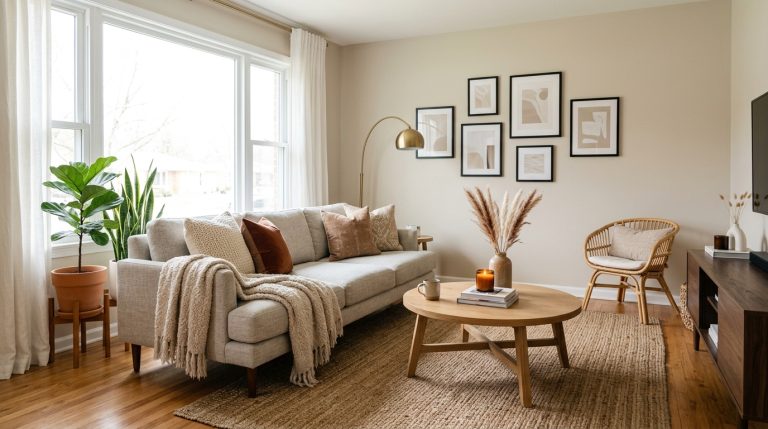
I started looking for an 8×10 rug. The prices were daunting. My old $120 rug was a distant memory. Good quality 8×10 rugs often start around $300-$400, and go way up from there. But I was committed. I found an 8×10 jute rug from Rugs USA on sale for about $280. It wasn’t the plush, patterned rug I initially wanted, but it was the right size and the price was doable. When it arrived and I unrolled it, the difference was immediate and dramatic. The room finally felt grounded. The sofa, armchairs, and coffee table all had their front legs on the rug, creating a defined zone. The room felt bigger, ironically, because the rug wasn’t trying to shrink away from the furniture. It connected everything.
Specific Rug Recommendations (and Warnings)
Based on my own trial and error, here’s what I recommend for budget-friendly, correctly-sized rugs:
- Rugs USA: This is my go-to for sales. Their 8×10 and 9×12 options often go on deep discount. I’ve bought several rugs from them (jute, wool blends, synthetic) and have generally been happy. Expect to pay anywhere from $250-$500 for a decent 8×10 depending on the material and sale.
- Wayfair: Similar to Rugs USA in terms of selection and sales. Just be sure to read reviews carefully for shedding and color accuracy. I once bought a “cream” rug that arrived looking decidedly yellow. Sent that one back.
- IKEA: Their larger rugs, like the Stockholm 2.0 (8’2″ x 11’6″), are surprisingly good quality for the price ($399). They also have some decent 8×10 options for less. The flatweave designs tend to hold up well.
- Target (Threshold/Studio McGee): Skip their larger rugs, especially anything with a shag or pile. I bought a Threshold 8×10 shag rug for $250 once, thinking it was a steal. It looked great for about a month, then started pilling terribly and shedding fuzz balls constantly. It was a nightmare to clean and looked worn out within 3 months. Not worth it, even if the price looks good. Their smaller, flatweave accent rugs are fine, but for anything anchoring a room, hard pass.
- Amazon: You can find some hidden gems, but it’s a gamble. Always check the seller reviews and product photos carefully. I found a great synthetic 8×10 oriental-style rug for $200 that has held up surprisingly well, but it took a lot of digging.
The Actual Measurements You Need
Don’t guess. Don’t eyeball it. Measure your room. Seriously. Here’s a basic guide:
- For a 10×12 living room: Aim for an 8×10 rug. If your budget allows and your furniture is arranged to accommodate it, a 9×12 would be even better.
- For a 12×14 living room: A 9×12 rug is your minimum. A 10×14 or even larger would be ideal.
- For a dining room (under a standard 6-8 seater table): You need a rug large enough for the chairs to remain on the rug even when pulled out. This usually means at least an 8×10 rug for a rectangular table, or an 8-foot round rug for a round table.
- For a bedroom (under a Queen bed): An 8×10 rug works well, extending roughly 2-3 feet beyond the sides and foot of the bed. For a King bed, a 9×12 rug is a better fit. You want enough rug showing on either side of the bed to feel substantial.
The biggest mistake people make is trying to fit a 5×7 rug into a room that demands an 8×10. It’s like wearing shoes two sizes too small. It just never looks right, and it makes the whole room feel off-balance. Resist the urge to go small to save money. Save up, or wait for a sale. A correctly sized rug, even a basic one, will do more for your room than a fancy, tiny rug ever will.
This weekend, grab a measuring tape. Measure your living room, your dining room, your bedroom. Figure out the minimum rug size you truly need. Then, start tracking sales at Rugs USA or Wayfair. Your room will thank you.
Frequently Asked Questions
What’s the most common rug sizing mistake?
The most frequent error is choosing a rug that is too small for the room. This fails to properly anchor furniture, making the space feel disconnected, cramped, and visually unbalanced.
How does a wrong-sized rug affect a room’s aesthetic?
An undersized rug can make a room appear smaller, cluttered, and unfinished. It creates an illusion of floating furniture and disrupts the flow, making the entire space look awkward and uninviting.
What’s a key principle for selecting the correct rug size?
A good rule is to ensure the rug is large enough to extend under at least the front legs of all primary furniture pieces in a seating arrangement. This grounds the space and unifies the room.